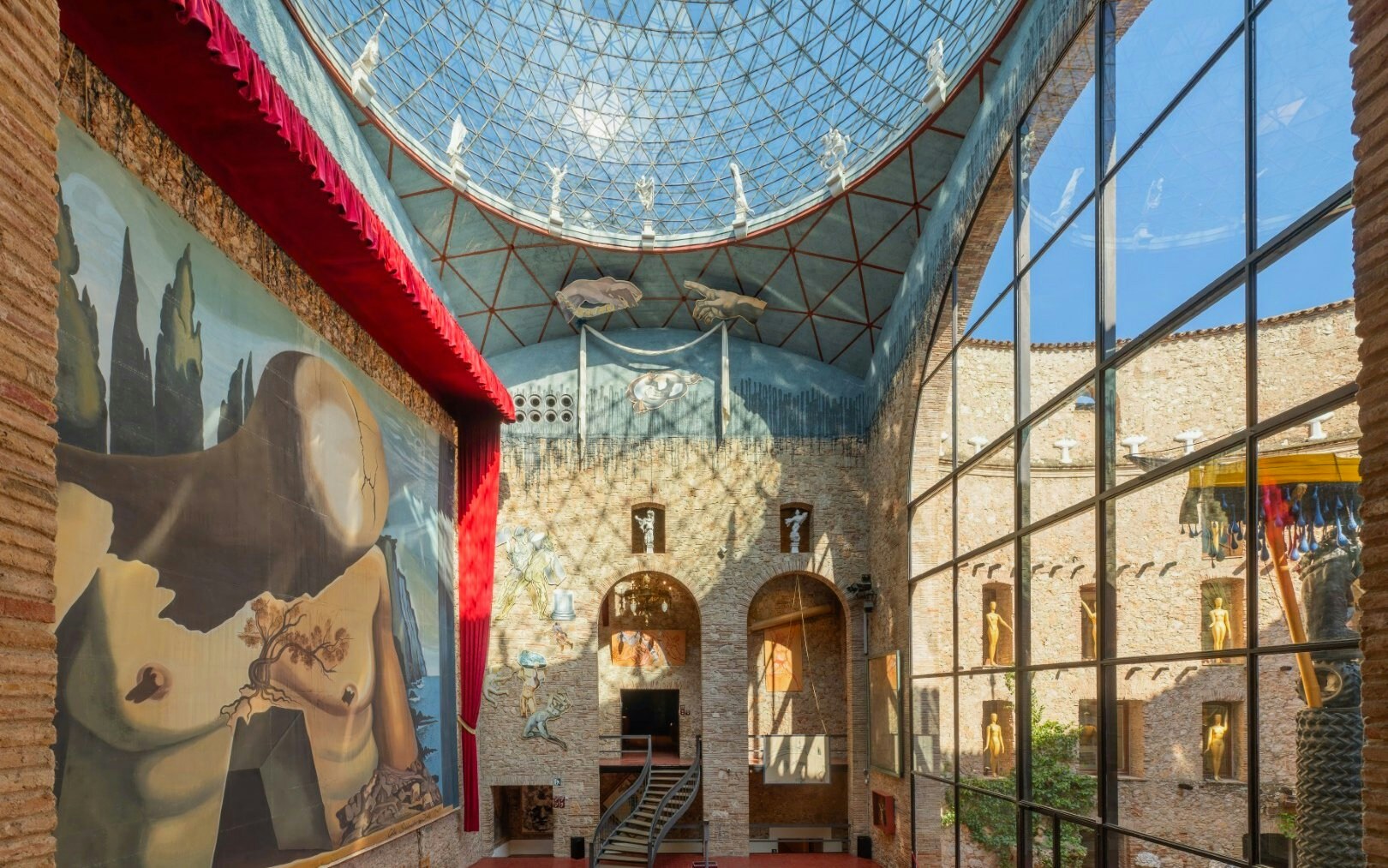
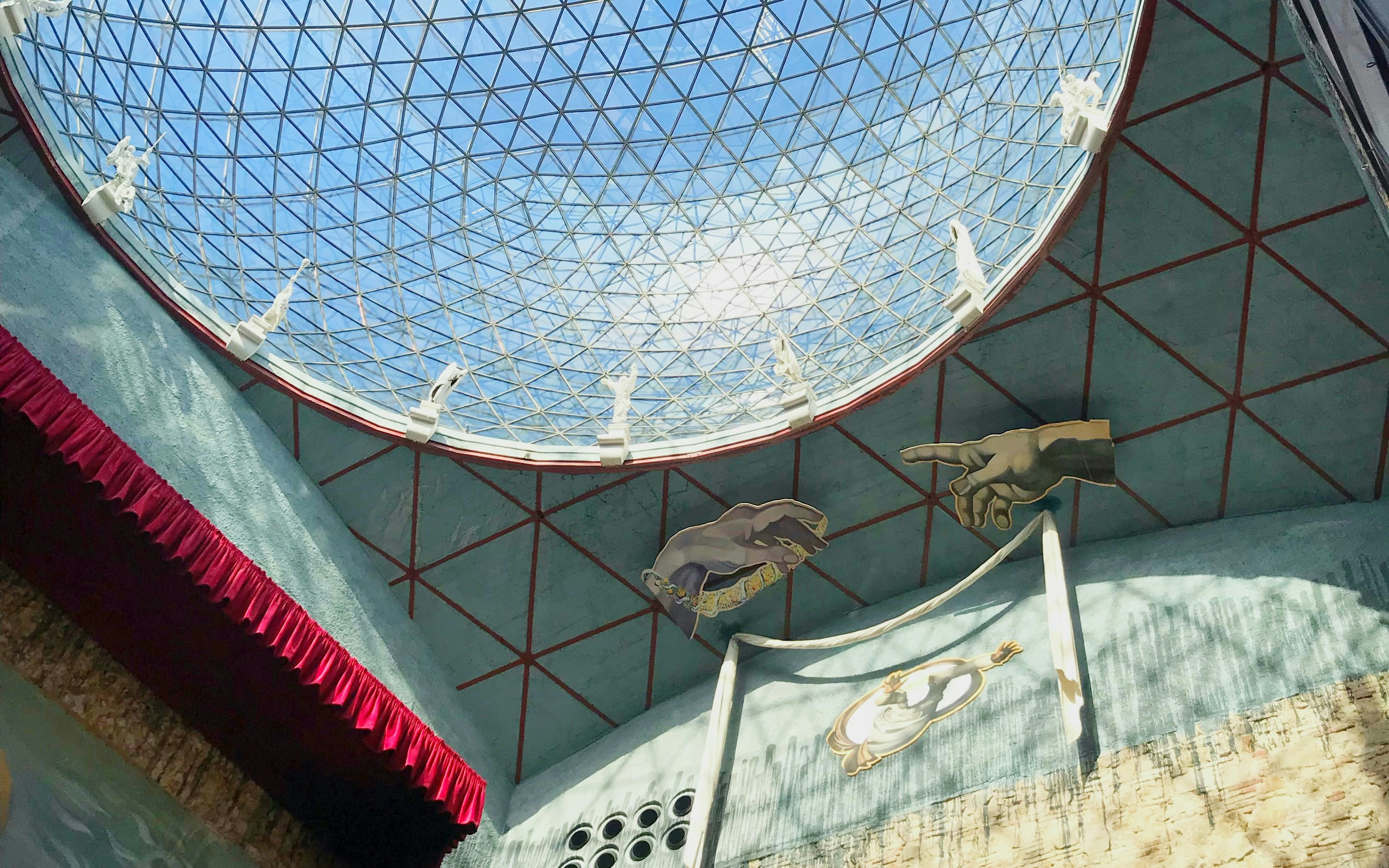
You step into the heart of the Dalí Theatre-Museum under a glass dome that feels more sci-fi than classical. This central patio sets the tone for the Dalí Theatre and museum—bold, theatrical, and intentionally disorienting, exactly how Dalí wanted visitors to begin their journey.
Why is the Dalí Theatre-Museum a must-visit attraction?
The Dalí Theatre-Museum doesn’t ease you in. It drops you straight into Dalí’s brain. You enter through a former 19th-century theatre, rebuilt by the artist himself, and suddenly you’re standing beneath a glass geodesic dome, staring at a courtyard filled with surrealist illusions. Nothing about the Dalí Theatre and Museum behaves the way a normal museum does. There’s no neat chronology. No polite distance. It’s theatrical, chaotic, deliberate.
Yes, you’ll see the iconic surrealist paintings. But you’ll also see holograms, optical illusions, sculptures, stage sets, and Dalí’s own crypt beneath the stage. Compared to the Salvador Dali Museum in Florida, this one feels rawer, stranger, and more personal.
What to see at the Dalí Theatre-Museum
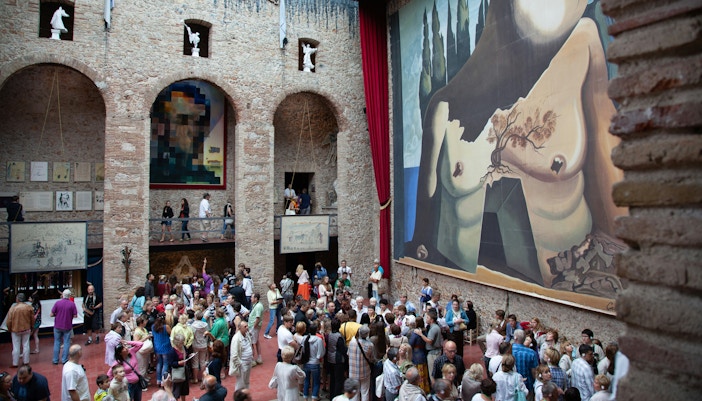
The Courtyard & Geodesic Dome
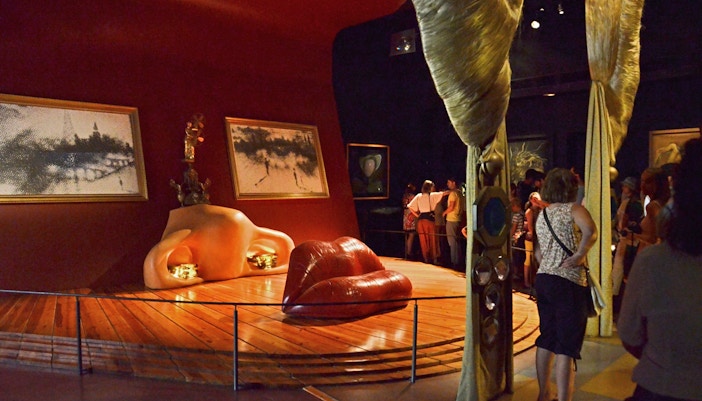
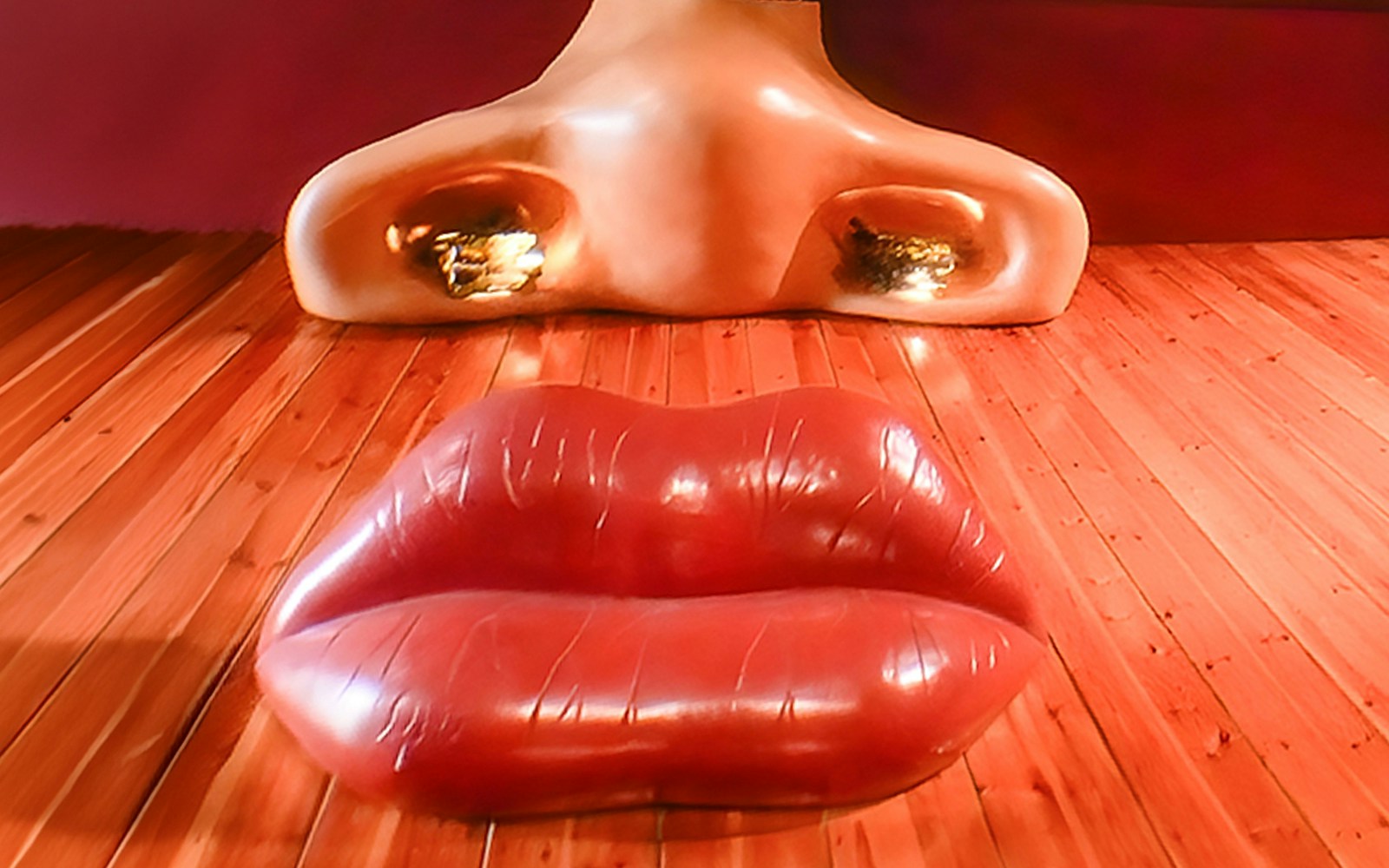
The Mae West Room
One of the most photographed spaces inside the Dalí Teatro Museo. From a raised viewing point, a sofa, curtains, and paintings snap into a glamorous face. It’s playful, clever, and pure Dalí, an immersive optical illusion that defines the spirit of the Salvador Dali Museum in Figueres.
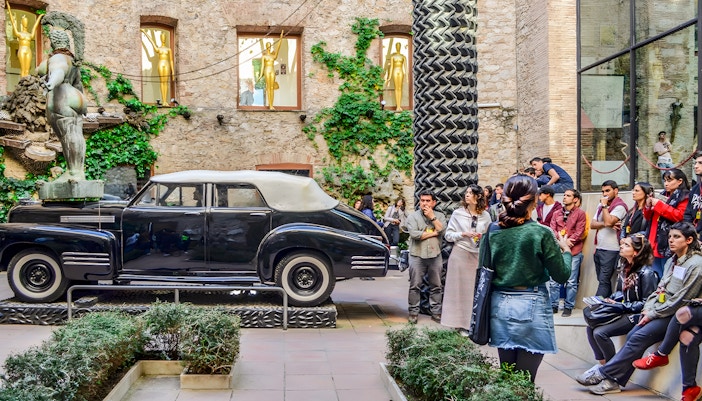
The Rainy Taxi Installation
A vintage car sits indoors while rain pours inside it endlessly. Yes, really. This surreal setup captures Dalí’s obsession with dream logic and unexpected drama, making it one of the most memorable moments in the Dalí Theatre-Museum experience.

The Treasure Room
This quieter section showcases Dalí’s jewels, gold sculptures, and intricate designs. It’s a different side of the artist: precise, luxurious, and obsessive. Many visitors say this room alone sets the Dalí Theatre and Museum apart from the Salvador Dalí Museum abroad.
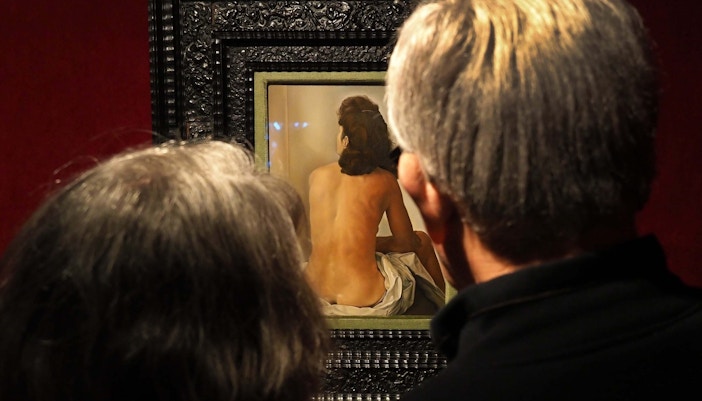
Paintings, Sculptures & Experiments
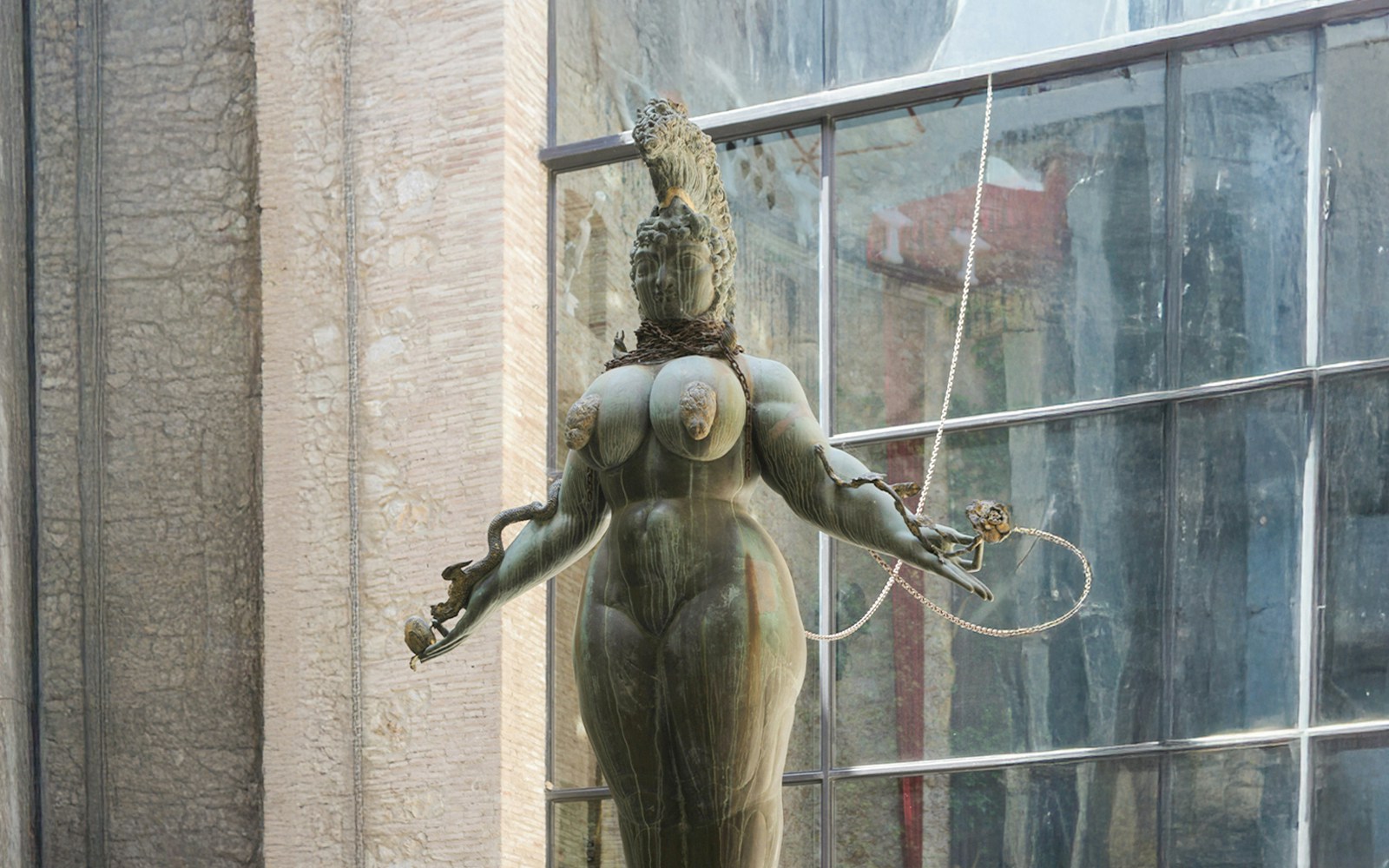
Spread across multiple floors are paintings, stage sets, holograms, and experiments from different phases of Salvador Dalí’s career. There’s no straight line, only a beautifully strange walk through his evolving mind.
Salvador Dalí Museum photos
A museum designed by Dalí himself
This is the only Dalí Theatre-Museum fully imagined, curated, and staged by Dalí. Every corner follows his logic, not museum rules.
Brief history of the Dalí Theatre-Museum
- 1850 – Figueres inaugurates its municipal theatre, which later becomes central to the story of the Dalí Theatre-Museum.
- 1939 – The theatre is destroyed during the Spanish Civil War, leaving behind roofless ruins in the heart of the city.
- 1960s – Salvador Dalí proposes turning the abandoned theatre into a museum dedicated entirely to his work, choosing the ruins for their dramatic and symbolic value.
- 1969 – Construction begins under Dalí’s direct supervision, with the artist designing the layout, installations, and visitor experience himself.
- 1974 – The theatre and museum officially opens to the public, conceived by Dalí as a “total work of art” rather than a conventional museum.
- 1984 – The iconic geodesic dome is completed, becoming one of the defining visual elements of the Dalí Teatro Museo.
- 1989 – Dalí is buried beneath the former stage, making this both a cultural landmark and his final resting place.
Architecture of the Dalí Theatre-Museum
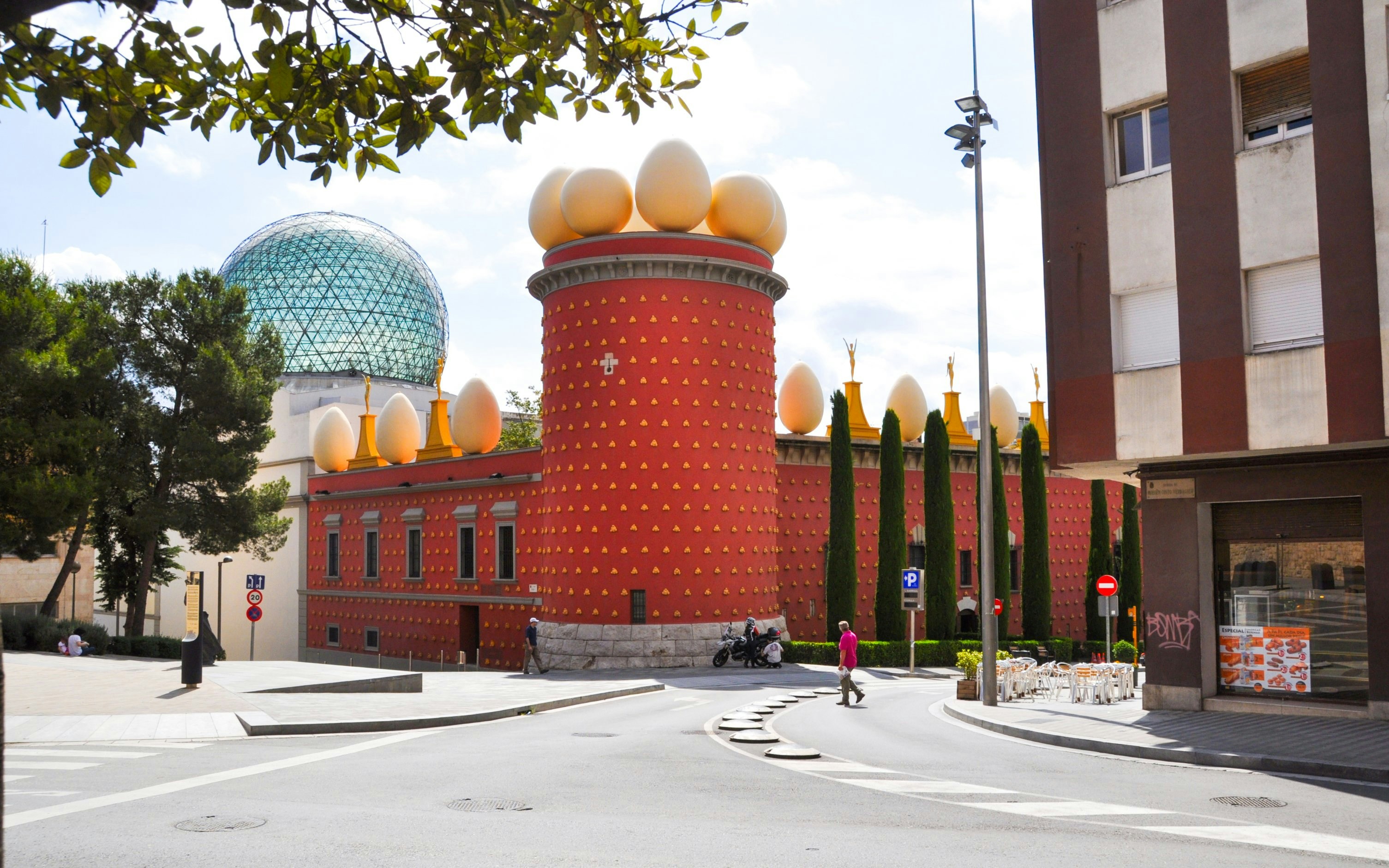
The architecture of the Dalí Theatre-Museum is as provocative as the art inside it. Built on the ruins of Figueres’ old municipal theatre, the structure deliberately blurs the line between building and artwork. Dalí transformed a bombed-out shell into a surreal monument, keeping the theatrical layout while reimagining every surface.
The most striking feature is its glass geodesic dome, added in 1984, which floods the central courtyard with light and gives the space an almost cosmic feel. Outside, giant eggs line the roof and golden bread rolls cling to the red façade, symbols Dalí repeatedly used to represent birth, decay, and desire. Nothing here is decorative by accident.
Additional information about the Dalí Theatre-Museum
One detail many visitors miss: the museum was designed to be walked without a fixed route. Dalí wanted people to get lost, double back, and discover works by accident. This is why the Dalí Theatre and Museum often feels chaotic but intentional. The museum also hosts temporary exhibitions, especially in the Dalí Jewels space, adding depth beyond the permanent collection.
Frequently asked questions about the Dalí Theatre-Museum
The Dalí theatre-museum is famous for being the only museum designed by Salvador Dalí himself, blending paintings, installations, architecture, and optical illusions into one immersive experience.
The Dalí Theatre-Museum in Figueres was conceived, designed, and curated by Salvador Dalí himself inside a ruined theatre. The museum in Florida presents his work in a more traditional, chronological museum format and was created after his death.
Most visitors spend two to three hours exploring the Salvatore Dalí Museum, though art lovers often stay longer inside.
Yes. The museum is visual, playful, and full of surprises, making it engaging even for younger visitors.
Highly recommended. The Dalí Theatre-Museum often sells out, especially in summer, so booking tickets online helps avoid long queues.
Salvador Dalí is buried beneath the former stage of the museum, making it unique among every Salvatore Dalí Museums worldwide.
Photography is allowed in most areas of the Dalí Teatro Museo, but flash and tripods are restricted to protect the artworks.
