- Arrive early at Salvador Dalí Figueres: The museum fills up quickly, especially mid-morning. Visit right after opening to experience Salvador Dalí’s works with fewer photobombing elbows.
- Understand Salvador Dalí surrealism before rushing: Dalí’s surrealism is layered, playful, and intentionally confusing. Give each piece time; double images and hidden forms often appear only after a slow stare.
- Shift angles: Many works change meaning depending on where you stand. Dalí designed this museum as a stage, so move around and let the art rearrange itself.
- Installations are not optional: Paintings draw crowds, but rooms like Mae West’s installation are essential to understanding Dalí’s imagination beyond the canvas.
- Spot Gala, the recurring muse: Dalí’s wife and muse appears throughout the museum. Finding her becomes part of the experience.
Salvador Dalí | Surrealist Mastermind in Figueres
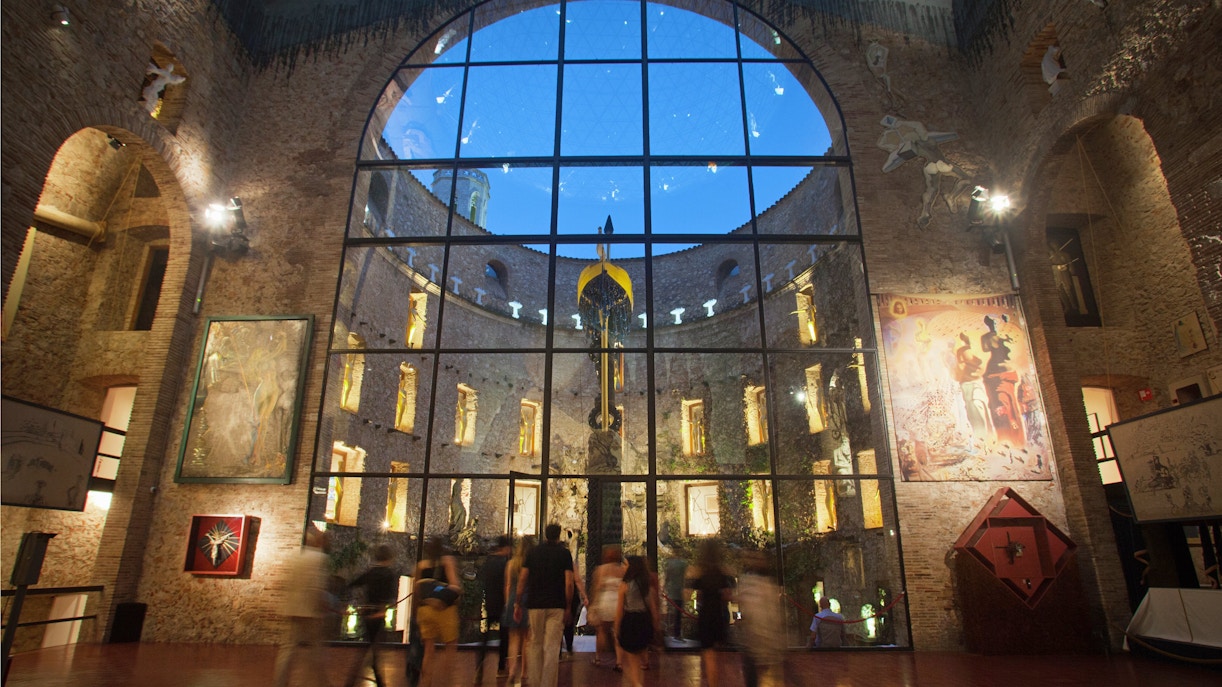
Few artists turned their imagination into a full-blown spectacle quite like Salvador Dalí. Eccentric, theatrical, and wildly inventive, he didn’t just paint surrealism; he performed it. In Figueres, his hometown, Dalí’s legacy comes alive inside the Dalí Theatre-Museum, a space he designed as the ultimate expression of his mind.
Visitors can explore his works throughout the museum, from monumental installations to intimate paintings, all included with a standard Dalí Theatre-Museum ticket, no separate entry required.
Salvador Dalí’s paintings at the Dalí Theatre-Museum

1/4
The Hallucinogenic Toreador
Located in the Treasure Room
A visual puzzle disguised as a painting, this masterpiece rewards patience. Bulls, Venus statues, and optical illusions collide into a surreal meditation on Spanish identity, obsession, and spectacle. Stand still—the image rearranges itself the longer you look. Classic Dalí mind games.
Galatea of the Spheres
Located in the Palace of the Wind Room
Floating spheres form the face of Gala, Dalí’s lifelong muse, blending science, spirituality, and devotion. Painted during his “nuclear mysticism” phase, it’s serene, mathematical, and hypnotic. Proof that surrealism can be soft-spoken too.
Soft self-portrait with grilled bacon
Located in the Treasure Room
Equal parts ego and satire, this melting face (yes, that’s Dalí) droops like overcooked cheese. It’s funny, unsettling, and deeply self-aware, a reminder that Dalí never took himself too seriously… even when immortalizing himself.
Mae West Room
Located in the Mae West installation space
Not a painting, but impossible to ignore. Viewed from the right angle, a couch, fireplace, and curtains transform into Mae West’s face. It’s interactive surrealism and one of the museum’s most delightful “aha!” moments.
Tips for viewing Salvador Dalí at the Dalí Theatre-Museum
Brief history of Salvador Dalí
- 1904: Salvador Dalí is born in Figueres, Catalonia—answering the ever-popular question: where was Salvador Dalí born?
- 1920s: Studies at Madrid’s Royal Academy of Fine Arts; gains a reputation for brilliance, rebellion, and getting expelled (twice).
- 1929: Joins the Surrealist movement in Paris and develops his signature dream logic, paranoia, and symbolism.
- 1931: Paints Salvador Dalí's The Persistence of Memory, instantly immortalizing melting clocks and flexible reality.
- 1940s–1950s: Moves between Europe and the U.S., embracing fame, film, fashion, and theatrical self-promotion.
- 1989: Dalí dies in Figueres. For the curious, how did Salvador Dali die? Heart failure ended one of art’s most flamboyant lives.
- Today: His legacy defines modern surrealism, drawing millions to Figueres each year.
Did you know?
✔ Dalí believed he was the reincarnation of his older brother, also named Salvador, who died before he was born. talk about a dramatic origin story.
✔ His iconic mustache wasn’t just facial hair; Dalí claimed it was “purely aesthetic” and styled it like clock hands for publicity photos.
✔ The melting clocks in The Persistence of Memory were inspired by Camembert cheese left out in the sun. Proof that great art sometimes starts in the fridge.
✔ Dalí once arrived at a lecture wearing a deep-sea diving suit and nearly suffocated while explaining creativity. Commitment level: extreme.
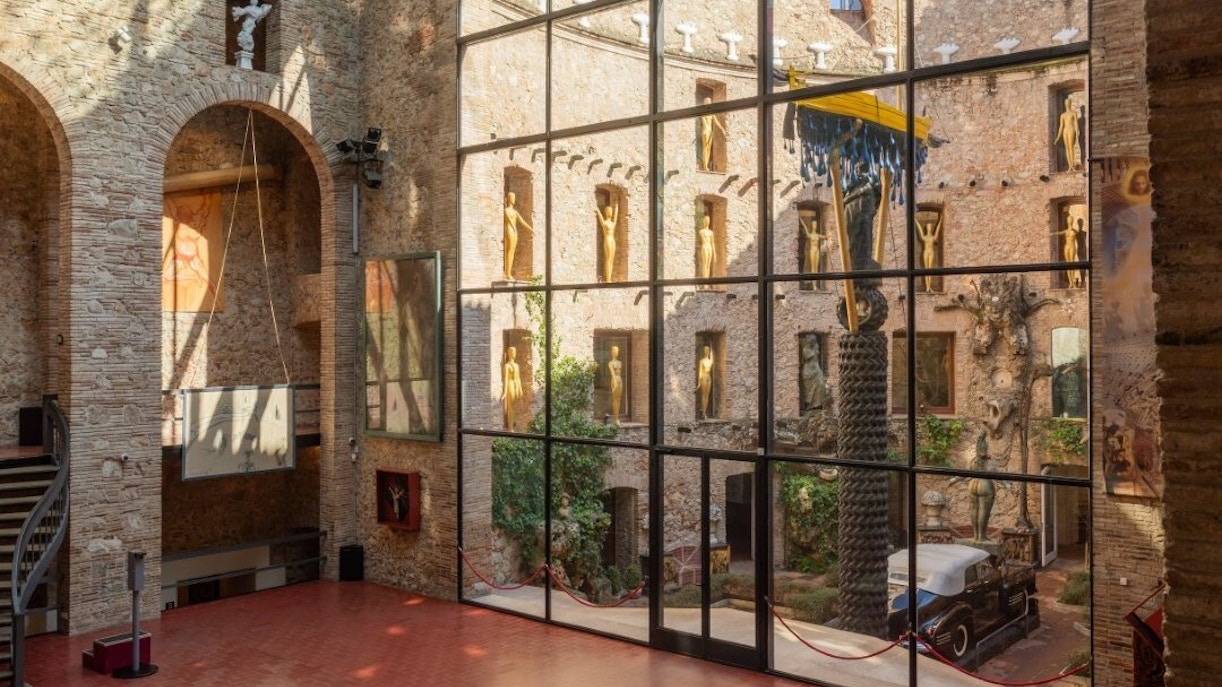
✔ He designed the Dalí Theatre-Museum himself, intending it to be experienced as one giant artwork rather than a traditional gallery.
✔ Many of these Salvador Dalí facts come alive when you notice how often humor, ego, and illusion appear side by side in his work.
Salvador Dalí’s artistic style
The Salvador Dalí art style is rooted in Surrealism, a 20th-century avant-garde movement that explored dreams, the subconscious, and irrational imagery. Rather than painting loosely or abstractly, Dalí used precise, almost photographic realism to depict impossible scenes.
A defining feature of Salvador Dalí's surrealism is this tension between control and chaos. His technique was classical and disciplined, but his subjects were psychological and bizarre. Time, decay, religion, science, and desire recur throughout his work, often layered with symbolism and double imagery.
He called his method “paranoiac-critical”, a self-induced state that allowed him to see multiple images within one form. The result? Paintings that look logical at first glance, then quietly destabilize reality.
Where else to see Salvador Dalí

Dalí Museum, Florida
This is the most comprehensive Dalí collection outside Spain, and it shows. From early academic works to large-scale surrealist canvases, the museum traces his evolution in depth. If Figueres is Dalí’s theatrical autobiography, Florida is the footnoted, fully annotated edition. Ideal if you want context, chronology, and scale.

Dalí Paris
A focused look at Dalí beyond painting. Sculptures, illustrations, and graphic works dominate here, revealing how his surreal ideas translated into form, volume, and object.
Reina Sofía Museum
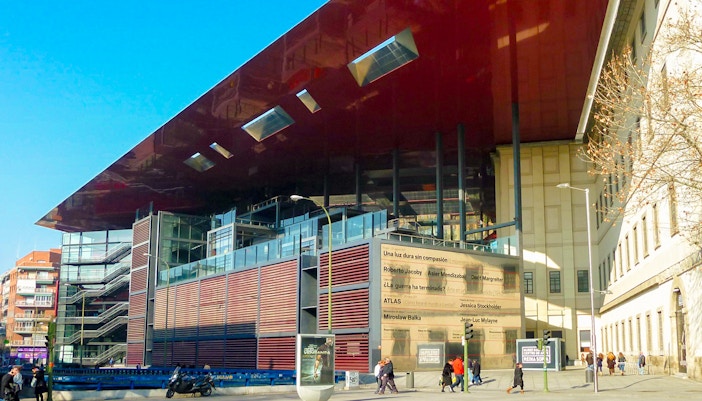
This is where Dalí’s early psychological intensity shines. The works here capture his transition into surrealism. Seeing Dalí alongside other Spanish modernists sharpens your understanding of just how strange (and singular) his vision was.
Dalí House-Museum
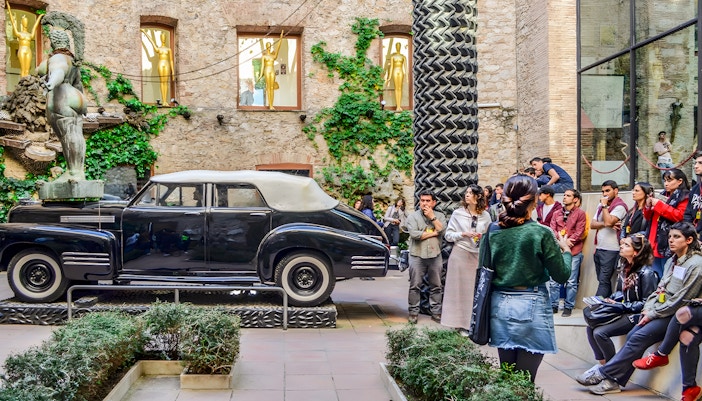
This was Salvador Dalí’s actual home and studio from 1930 until the early 1980s. He lived here with Gala, painted several major works, and personally designed the space by joining former fishermen’s huts into a single, surreal residence. The interiors, furniture, and sightlines remain largely intact, offering rare insight into Dalí’s daily life, creative process, and carefully constructed persona.
Frequently asked questions about Salvador Dalí
Salvador Dalí was born in Figueres, Catalonia. Yes, where Salvador Dalí was born is also the city that now hosts his most important museum.
Because Figueres was Salvador Dalí's birthplace, creative anchor, and final resting place. He personally designed the Dalí Theatre-Museum there as his artistic legacy.
Among the most intriguing Salvador Dalí facts: he believed dreams were more truthful than reality and developed his own method to access the subconscious while awake.
In Salvador Dalí's The Persistence of Memory (showcased at MoMA, New York), melting clocks symbolize the fluid, unstable nature of time, a direct challenge to logic, physics, and certainty.
Salvador Dalí surrealism explores dreams, paranoia, and the unconscious, using realistic technique to depict irrational and often unsettling imagery.
The Salvador Dalí art style combines classical draftsmanship with bizarre symbolism, double images, and hyper-detailed dreamscapes that destabilize reality.
No. All artworks at the Dalí Theatre-Museum are included with a standard entry ticket.
Set aside 2 to 3 hours. Dalí designed the space to be immersive, layered, and slow to absorb.


